www.armme.org
The ARM-ME website may be down for up to three days. In the meantime if you need any information please contact us via:
labkristan@yahoo.com
Warren methadone clinic review to continue, again — Midcoast — Bangor Daily News — BDN Maine
Warren residents vote to settle lawsuit over methadone clinic — for $1 — Midcoast — Bangor Daily News — BDN Maine
Two methadone clinics compete to open first in the midcoast — Health — Bangor Daily News — BDN Maine
Two methadone clinics compete to open first in the midcoast — Health — Bangor Daily News — BDN Maine.
Last modified Jan. 15, 2012, at 5:36 p.m.


WARREN, Maine — Two companies trying to create methadone clinics in the midcoast are in a neck-and-neck race to open first. Recently, both companies announced prospective opening schedules and it appears there may not be a clear winner. Both clinics likely will open and compete, according to the companies.
CRC Healthgroup said it plans to open a clinic in Warren first and whether two clinics operate in Knox County will be up to its competitor. Colonial Management Group, which plans to open a clinic in Rockland, does not speak with the press, according to its corporate headquarters, but it told the city that it will open far sooner than CRC.
CRC is one step away from securing its state license — it just needs an on-site review, according to the state agency on substance abuse, but it doesn’t have town approval. Colonial has the opposite: go-ahead from Rockland, but hasn’t begun the state application.
Colonial told Rockland it planned to open “by the end of January,” according to an article in the Dec. 29, 2011, issue of a local newspaper, the VillageSoup Gazette. But that would be impossible, according to state officials.
“That’s not a realistic expectation for a company that hasn’t filed an application. It will take longer than a month,” said Guy Cousins of the Maine Office of Substance Abuse.
According to Cousins, the state’s department that handles licenses is currently understaffed and will take longer than usual to process an application.
As for CRC, it plans to open a clinic in fewer than 180 days — depending on whether the town of Warren allows it to. It filed its application with the town and Warren has until mid-March to give it a thumbs up or down. The company has been battling the town since the fall of 2010 and even sued Warren last September and received a $320,000 settlement. The lawsuit was filed after Warren refused to let the clinic purchase a piece of land from the town. The clinic claimed this was a violation of the Americans with Disabilities Act.
The battle apparently is not over. Although the Warren Planning Board said the application was mostly complete, the proposed location for the methadone clinic doesn’t meet the town ordinance, according to town manager Grant Watmough. This could potentially send the application back a few steps and take more time.
As it is, the Warren clinic has many more public meetings before CRC can think about renovating a place in town to move into.
The public meeting schedule alone is part of why the Rockland-bound clinic was able to speed through the process. Rockland holds more planning board and council meetings per month than the much smaller town of Warren.
Another reason Colonial moved fast but CRC is slogging through the town-level permitting is because of public outcry. Warren, where CRC wants to go, has had hundreds of people fill their methadone-clinic-related meetings. The town has had to change venues during standing-room-only meetings to make sure everyone who wanted to attend a meeting could without breaking fire codes.
Few, if any, Rockland residents attended the planning board and city council meetings where Colonial’s clinic was discussed. While Warren fights out its first methadone clinic applications, Rockland has experience with the process. Rockland already fought once in a not-too-different battle, and also was sued over an ADA claim. That claim was later dismissed, but it took the Turning Tide clinic at least 18 months to get city approval to move in. It later was closed down by federal drug agents, who deemed it unsafe after its owner was arrested on drug charges. This time, for Colonial, it took three months to get approved by Rockland.
“The first time [we processed a methadone clinic permit] we had a ton of people at some of our meetings — from both sides. This time we had nobody,” said Rockland’s mayor Brian Harden.
To the state, it won’t matter if both clinics open. There are no regulations about how close clinics can be. According to Cousins at the state office of substance abuse, location “is a business decision. The organization has an idea of how many clients they need to see to make that business viable.”
It might actually save the state money to have another clinic. MaineCare pays travel expenses for its clients to get treatment. In Maine, 43 percent of people who take methadone legally get the service through MaineCare. That means in the Rockland area, about 120 people were on MaineCare and they now have to travel about 110 miles round trip to the nearest clinic — six days a week. Only about 100 of those people successfully transitioned into another clinic, according to Cousins.
It’s not clear how many of those people drive themselves to the clinic and file for their 20-cents-per-mile MaineCare gas refund — but if all 100 people did, it would cost the state $2,200 a day. Many patients must go to therapy six days a week.
By having a clinic — or two — in Knox County, those MaineCare claims would shrink.
“There are not enough services for the demand. We are one of the highest states per capita with prescription misuse and addiction. Opiate drugs and heroin and morphine is now the No. 1 reason people are seeking treatment — it has surpassed alcohol for the first time in years, and alcohol isn’t going away,” Cousins said.
Similar articles:
Son’s drug struggle motivates dad’s fight for methadone clinic — Health — Bangor Daily News — BDN Maine
Last modified Jan. 15, 2012, at 4:12 p.m.

Related stories
WARREN, Maine — Bob Emery Jr. has taken a lot of heat for working to bring a proposed methadone clinic to this Knox County town. He has lost business at his construction company, he said. Half his staff has quit over the controversy. His family has been targeted and is upset. But he won’t let it go. For him, it’s not about business. This is about his son.
In 2004, his son, Robert Emery III, who was 20, went snowmobiling with his friends in Rockwood, near Moosehead Lake. He was accelerating when he misjudged a corner. In a second, his back slammed into a tree and his snowmobile kept him pinched there. He ruptured two disks, pinched off several nerves and aggravated his already painful scoliosis in the accident, doctors found. For his pain, the doctor gave Robert oxycodone, a narcotic.
It helped for a while, but after a year the medicine stopped having any effect.
“I built up a tolerance for them. My normal prescription wasn’t helping me,” Robert said.
When he went to his doctor, the doctor refused to increase the dosage. The pain became unbearable. When Robert sat, he hurt. When he stood, the pain was excruciating. It didn’t stop during any minute of the day or night. He couldn’t sleep.
“That’s when I started self-medicating and buying stuff on the street,” Robert said.
It got scary fast. He worried about how quickly he had become numb to the oxycodone and he wanted to quit using it. So Robert tried to stop altogether in 2005.
“That’s when I learned about withdrawals. The first withdrawal was the worst thing I’ve ever been through,” he said. “My whole body was in pain, hot and cold sweats, all my joints were aching. I couldn’t sleep. I’d get so sick and throw up. I lasted two days.”
All he knew was that he was in a lot of pain and needed more drugs to make it go away. According to Robert, he never felt high from the drugs — he just felt like he was in less pain. He went back to the streets for relief. Robert’s entire life became consumed by drugs. He had been prescribed 60 mg of oxycodone a day by his doctor. Soon, he was up to 300 mg or more per day, although sometimes he had to settle for Vicodin or Percocet.
He stopped showing up for work. He stopped cleaning his house. He stopped going outside. He didn’t care about fishing or hanging out with his family anymore.
“It got to the point where I was not caring about any of my things. To give you an example, in 2007 I had a 2005 Harley Davidson Sportster 1200, brand new, a beautiful bike,” Robert said. “It got to the point where one day I was out of money and sick [from withdrawal] and was desperate. Without thinking about it at all I called a friend that I was buying [drugs] off of and sold my Harley to him for 30 oxycodone pills. It breaks my heart.”
The bike had cost him $12,000. He had sold it for two day’s worth of pills with a street value of about $1,000.
And that’s how life was for Robert. For four more years.
“Anything of any value I had I’d pawn or sell to get more drugs,” Robert said. “Every day I was searching and hunting for the next pill. That consumed every minute of my every day. That’s how it was until 2009. I had sold everything I had. All my belongings, everything I worked so hard for — everything was gone. That’s when I hit rock bottom. I started realizing I needed to do something about it.”
He went back to his doctor, who gave him suboxone, a prescription drug intended to help individuals become less dependent on opiates such as heroin. It worked for a couple months before the cravings for pills overtook him. He tried suboxone again — five more times. It just didn’t work for him. That’s when he heard about methadone, a synthetic narcotic used to help people who are addicted to opiates.
By then it was 2010 and the Turning Tide methadone clinic was operating two towns over, in Rockland. He attended one session and the next day began his dose of methadone.
“That first day when I got there I felt ill — I was not taking anything. They tell you not to do anything the day before. An hour and a half later I came out of it and started feeling OK. As the day went on I started feeling OK,” Robert said. “I wasn’t thinking about pills. Things were going good. I thought, ‘This might work.’ I kept going back.”
Soon he was back to work. He went fishing with his friends again. He was on better terms with his family, and, overall, he cared about his life again.
Then, unexpectedly, the Rockland methadone clinic was shut down by federal agents who arrested the clinic’s owner for doing drugs. The federal Drug Enforcement Agency said Turning Tide had become a danger to public safety.
“My heart sunk. What am I going to do now?” Robert said.
He was reassigned to a Waterville clinic, which was a four-hour round trip each day. In his ¾-ton pickup, it cost about $200 in gas plus about $100 for his treatments each week.
“Four months in, I was struggling. I was really struggling financially,” he said.
He gave up and tried to get off all drugs, cold turkey, but only lasted three days before buying pills off the street. After a month of that, he realized he needed methadone. So he sold his truck for a 4-cylinder car to save on gas and made daily trips to a Portland clinic for months before he started doing research and found a doctor near him who prescribes methadone. Now he goes there monthly for his methadone and a drug test. He goes to counseling each week and has been sober on methadone for 13 months.
“Things are going awesome. They’re great now,” Robert said. “I’m not lying. I’m not cheating. I’m not stealing. I was stealing from my family and friends. I stole a lot of money off my own dad to get pills. I wouldn’t even think of doing something like that now. I got my conscience back. Back then I didn’t have one.”
The stealing part was the thing that most upset his father, with whom he is close. After all, his dad, Bob Emery, owns the business Robert was stealing from — and he had only built those companies for his kids to inherit one day. But for the last 13 months, things have been great.
“Ever since I started methadone, my dad saw a huge change in me. He was the happiest guy alive,” Robert said. “When I first mentioned [methadone] to him, he didn’t like the idea — he was skeptical like everyone is now. He said I was just trading one drug for another. I see why some people might think that’s true, but it’s not. It totally turned my life around.”
Robert might be considered one of the lucky ones. He found a doctor near him who would treat him with methadone. But it’s unlikely that the 280 people who were served by the Turning Tide clinic in Rockland all are now getting the same treatment — in fact, according to the state office on substance abuse, only about 85 percent of those people successfully transferred to another clinic.
When Bob Emery Jr., 58, of Rockport, watched his son turn his life around through the Rockland clinic and then struggle through withdrawals and draining his pockets with his four-hour, round-trip drives to a new clinic, Emery knew he had to get involved. He started calling everyone involved with methadone treatment in Maine. Soon, he got in touch with Guy Cousins at the state’s substance abuse office, who told him CRC Healthgroups, a methadone clinic business, was looking to move to Maine. For more than a year, he’s been working diligently to find CRC a home in Warren, and it hasn’t been easy, he said. After losing a deal with the town to purchase an old school building for the clinic, he’s offered up his own business headquarters on Route 1, which is being considered by the town to be the new site.
It has cost his business. Picketers sometimes hold anti-methadone signs and wear buttons outside the office of his construction company. He has been called a drug dealer and there have been nasty things said about his family. Several of his employees have quit over the controversy. But he won’t stop fighting.
“I’m here to help. [When Robert was on pills] it was a devastating time. Things have changed tremendously. I know no matter how bad it gets, I’m the one who has always been there for him. I want to help these people. There must be, in these 280 people, people who just want to be healthy again. That’s why I’ve done everything I’ve done,” said Bob Emery. “As long as I’m living and breathing, if there is anything I can do to help these people and my son, I will.”
ARM-ME

Need help with a discrimination problem in Maine? Would you like to Join ARM-ME? Would you like to contribute to our blog? Contact us through our webpage!
OverDose Prevention

TODAY 70 PEOPLE will die from PREVENTABLE accidental overdose!
Get the facts, tell a friend, save a life.
If it was someone you love, wouldn't you want someone to help them? YOU CAN!
www.drugpolicy.org/overdose
Keep Methadone SAFE!
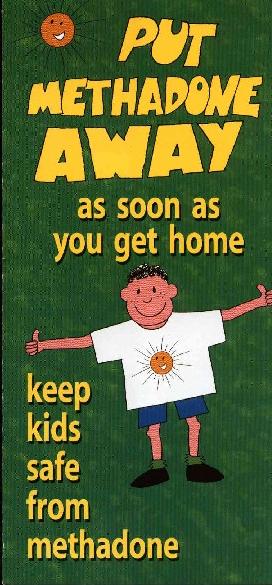
Help us prevent accidental overdose and poisoning of children! Keep all your medications locked and out of reach!
Take home medication ?’s
Compliant, stable methadone patients can earn the right to take home their medication-click this image to learn more!!
Suboxone Treatment

Treat opiate addiction at your Dr's office!

Here they come to save the day...!!
 ARM-ME
 billiesowers
 ACLU
ACLU DPA
DPA NAABT
NAABT LOST PROMISE
 Maine Overdose Prevention Project
 Methadone Support

 ARM-ME BLOG
FROM OUR READERS: